10 Min
Per Sample Analysis
300+
Corn Samples Analyzed
±1.3%
Amylose Error vs Lab Reference
No Lab Required
Smartphone-Based Workflow
Industry
Agriculture · Grains & Pulses
Procurement & Quality Assurance
Business Function
Capability
Computer Vision · Colorimetric Assay Design · Rapid Quality Estimation
Tech Stack
Colorimetric Assay (Lugol's Iodine) · RAW Smartphone/DSLR Imaging · Colour-Calibrated RGB Feature Extraction · RBF Support Vector Regression · Python
Overview
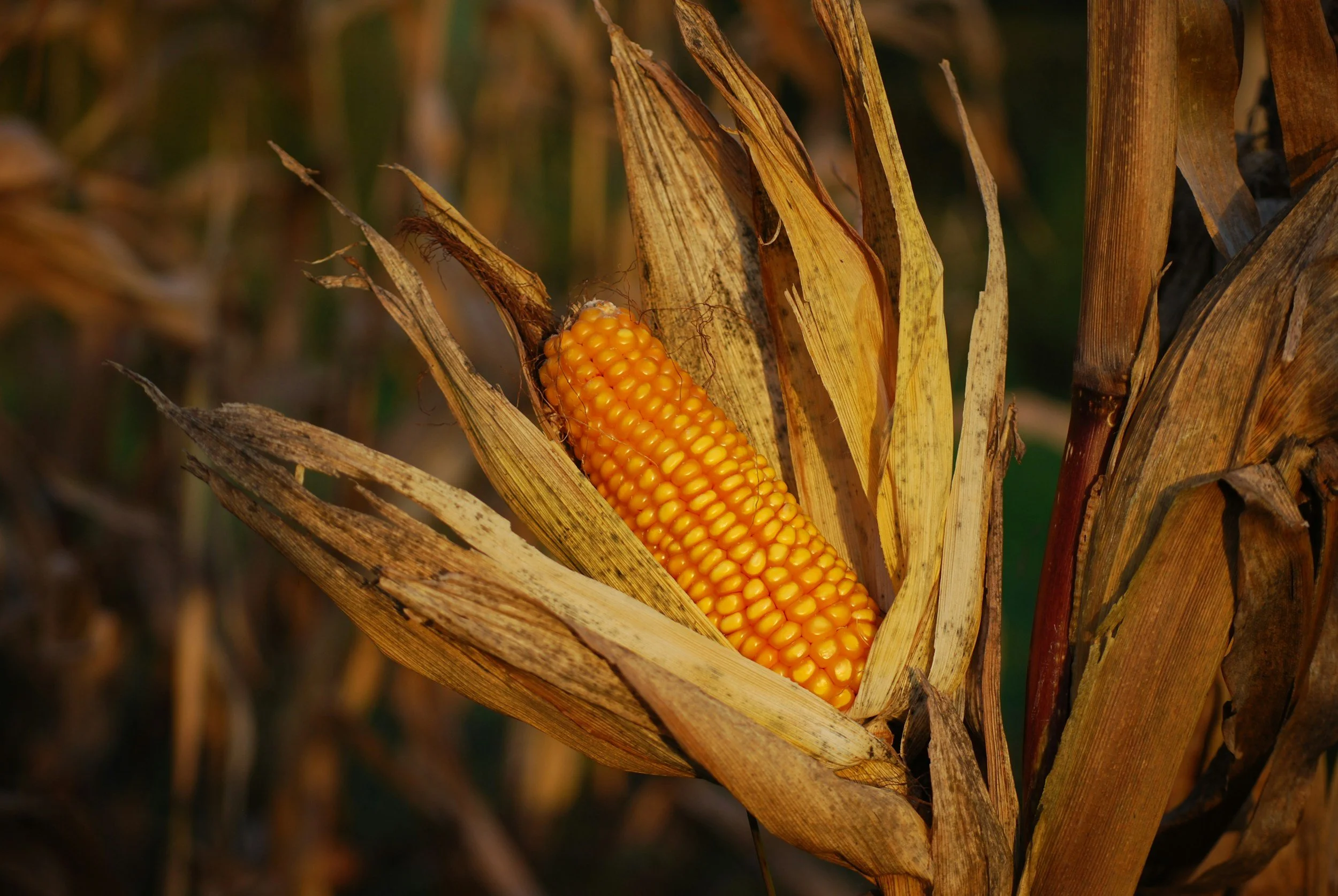
A leading Indian agri-commodities and foods company procures corn at scale from farmers and warehouses across central and northern India for food, ethanol or industrial starch applications. At procurement centers, pricing decisions are typically based on visual grain inspection, while accurate starch and amylose measurement requires laboratory testing with multi-day turnaround times.
To enable faster and more informed procurement decisions, the client asked Hornbill AG to determine whether starch quality could be estimated directly at the point of procurement without laboratory infrastructure or portable NIR instruments.
Challenge
Laboratory Dependency
Wet chemistry requires laboratory infrastructure and multi-day turnaround, making sample-level decisions impractical during procurement.
Challenging Field Conditions
The solution needed to operate without reliable power, laboratory equipment, or portable NIR instruments while producing results in minutes.
Weak Visual Signal
Natural variation in starch content produces only subtle color differences, requiring a robust chemistry and imaging workflow before AI modeling could begin.
No Existing Dataset
No labeled dataset existed linking iodine color response to starch composition across Indian corn varieties, requiring an entirely new ground-truth dataset to be created.
Our Solution
StarchLens was designed by solving the chemistry problem before the AI problem. The system is built around the iodine–starch inclusion complex, where amylose forms a helical complex with triiodide from Lugol's iodine, producing a color whose intensity varies with amylose concentration.
Two preparation methods were investigated. A non-heating workflow was initially developed to eliminate any dependence on power in the field, but visual separation between samples proved insufficient for reliable prediction. A second workflow—using a controlled heating step followed by dilution and staining—produced strong, repeatable color differentiation and became the standard operating procedure.
To ensure reproducibility, imaging was fully standardized using a fixed light-box, tripod, locked manual camera settings, RAW image capture, and documented operating procedures for both sample preparation and image acquisition.
The region of interest is automatically detected and cropped from the captured image.
Approximately 29 color descriptors—including RGB ratios, blue indices, HSV features, and regional metadata—are extracted from the stained sample.
An RBF-kernel Support Vector Regression model predicts amylose percentage and classifies samples as Low or High Amylose using a 16.5% threshold.
For low-amylose samples, a calibrated linear model estimates total starch content. Samples predicted above the threshold are intentionally reported only as High Amylose rather than returning unsupported numerical estimates, ensuring the system remains transparent about its predictive limits.
Impact Delivered

Lab-Comparable Accuracy
Achieved ±1.3% absolute error for amylose estimation and ±1.9% for total starch—within published tolerance bands for laboratory wet chemistry and NIR systems.

Built on Real Procurement Data
Developed using more than 300 corn samples collected across three Indian states, seven districts, and 136 villages to establish a lab-validated ground-truth dataset.

Rapid Field Deployment
Produces starch quality estimates in approximately 10 minutes using low-cost consumables and standard imaging equipment, without laboratory infrastructure.

Practical Decision Support
Provides reliable screening for procurement workflows, enabling rapid segregation of low- and high-amylose lots while identifying samples that warrant laboratory confirmation.